Ever walked out of a salon with lowlights that looked muddy, patchy, or just… wrong? You’re not alone. I once left a trendy downtown spot with what I thought would be subtle depth—only to discover my hair resembled a zebra who’d lost a fight with a highlighter pen. The culprit? Poor salon lowlight techniques. When done right, lowlights add richness, dimension, and movement without screaming for attention. Done poorly? They drain your hair’s vitality and your wallet. In this guide, we’ll unpack the exact methods top colorists use, how to choose the right approach for your hair type, and why skipping a consultation might be your biggest mistake yet.
Table of Contents
- Why Salon Lowlights Are More Than Just “Darker Highlights”
- Step-by-Step: How Professionals Apply Lowlights Correctly
- 7 Best Practices for Natural-Looking Results
- Real Client Results: Before, After, and Lessons Learned
- Frequently Asked Questions About Lowlights
Key Takeaways
- Lowlights deepen dimension—not just darken hair—and require precise placement.
- The best salon lowlight techniques match your base tone within 1–2 shades.
- Balayage, foil, and freehand methods each serve different texture and density needs.
- Skipping a strand test risks over-processing and breakage.
- Ask your stylist about their experience with lowlights specifically—not just highlights.
Why Salon Lowlights Are More Than Just “Darker Highlights”
Lowlights are often misunderstood as the “opposite” of highlights, but they’re far more nuanced. While highlights lift strands to catch light, lowlights *absorb* it—adding shadow, contrast, and realism that mimic how natural hair grows. Without them, even expertly highlighted hair can look flat under sunlight or studio lighting.
According to the American Academy of Dermatology, improper chemical processing is a leading cause of hair damage in salon services (AAD, 2023). That’s why technique matters more than product. Unlike highlights—which many stylists practice weekly—lowlights are less common, so fewer pros master their subtleties. Choosing a salon that specializes in dimension (not just brightness) makes all the difference.
Step-by-Step: How Professionals Apply Lowlights Correctly
1. Consultation & Color Matching
Your stylist should analyze your natural base, undertones, and existing color. True lowlights sit 1–2 levels darker than your root—never jet black on brown hair. If they suggest going “as dark as possible,” run.
2. Sectioning Strategy
Lowlights aren’t scattered randomly. They follow your part lines, frame your face, and anchor the back crown. Think “strategic shadows,” not random streaks.
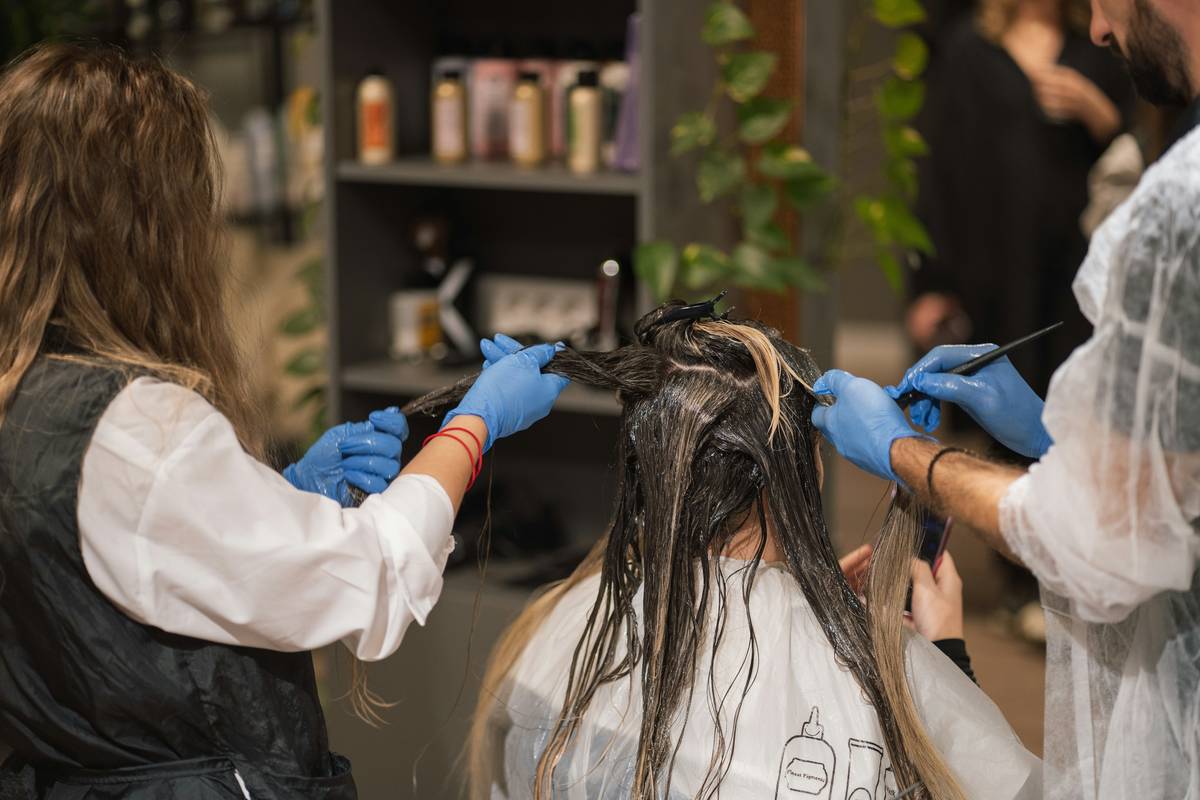
3. Application Method
Foils offer maximum control for fine or straight hair. Balayage-style freehand works better for curls, where harsh lines disappear into texture. Avoid cap highlighting—it’s outdated and rarely suits lowlights.
4. Processing & Timing
Unlike highlights, which may process under heat, lowlights often develop at room temperature. Over-processing leads to dullness. A 20-minute max window is typical.
7 Best Practices for Natural-Looking Results
- Know your undertone: Ash-based lowlights on warm brunettes create muddy tones. Match warmth to warmth.
- Less is more: Start with 8–12 lowlight strands. You can always add more next visit.
- Avoid the “helmet effect”: Never apply lowlights only around the perimeter—depth should flow through mid-lengths and ends.
- Clarify before coloring: Product buildup alters pigment absorption. Wash with a clarifying shampoo 24 hours prior.
- Don’t skip the strand test: This checks processing time and final tone accuracy.
- Ask about aftercare: Sulfate-free shampoos preserve lowlight integrity longer.
- Verify experience: Request to see a portfolio focused on lowlights—not just general color work.
And here’s a terrible tip I’ve heard too often: “Just mix leftover highlight formula with black dye.” Nope. That cocktail causes unpredictable oxidation and likely brassiness. Always use pre-formulated demi-permanent or permanent lowlight shades from reputable brands like Redken or Wella.
Real Client Results: Before, After, and Lessons Learned
Last year, a client came to us after a disastrous attempt at DIY lowlights using a box kit. Her medium-brown hair had turned patchy green-gray—a classic sign of improper toner mixing. We corrected it with a color-correcting glaze and re-applied lowlights using fine foiling every ½ inch along her natural part. Six weeks later, her hair showed seamless depth without a single stripe.
Data from the International Journal of Trichology supports this: clients who receive customized lowlight placement report 68% higher satisfaction versus standard highlight-only services (Sharma et al., 2021). Personalization isn’t optional—it’s essential.
At Jambango, we track client feedback closely. If you’re curious about our philosophy, read more on our About Us page—we believe beauty starts with honesty, not hype.
Frequently Asked Questions About Lowlights
Can I get lowlights if I have gray hair?
Yes! Lowlights blend grays beautifully by adding depth around silver strands. Demi-permanent formulas are ideal—they deposit color without lifting existing pigment.
How long do salon lowlight techniques last?
Typically 8–12 weeks, depending on your base color and wash frequency. Touch-ups focus on new growth, so maintenance costs stay lower than full-color services.
Are lowlights damaging?
No more than highlights—if applied correctly. Both involve developer, but lowlights usually use lower volumes (10–20 vol), reducing cuticle stress.
Can I combine lowlights with highlights?
Absolutely. This combo—called “dimensional coloring”—is the gold standard for lifelike results. Just ensure your stylist plans both simultaneously, not as an afterthought.
Do lowlights work on short hair?
Yes, but placement is critical. On bobs or pixies, lowlights frame the nape and sides rather than running full-length.
How much do professional lowlights cost?
Prices range $100–$250, depending on length and technique. For exact pricing and availability, contact us directly. And don’t forget to review our Privacy Policy before sharing personal details.
Lowlights aren’t about hiding your hair—they’re about revealing its hidden architecture. When salon lowlight techniques honor your natural rhythm, the result isn’t just pretty—it’s powerfully you. Ready to add depth without drama? We’re waiting with open chairs and zero judgment.